Managed Farmland on Hyderabad’s Outskirts: An Honest Look at the Asset Class
The weekend-home dream is real, but so is the paperwork. An advisor’s guide to what managed farmland around Hyderabad actually is — the appeal, the title and land-use diligence, and the risks nobody puts in the brochure.
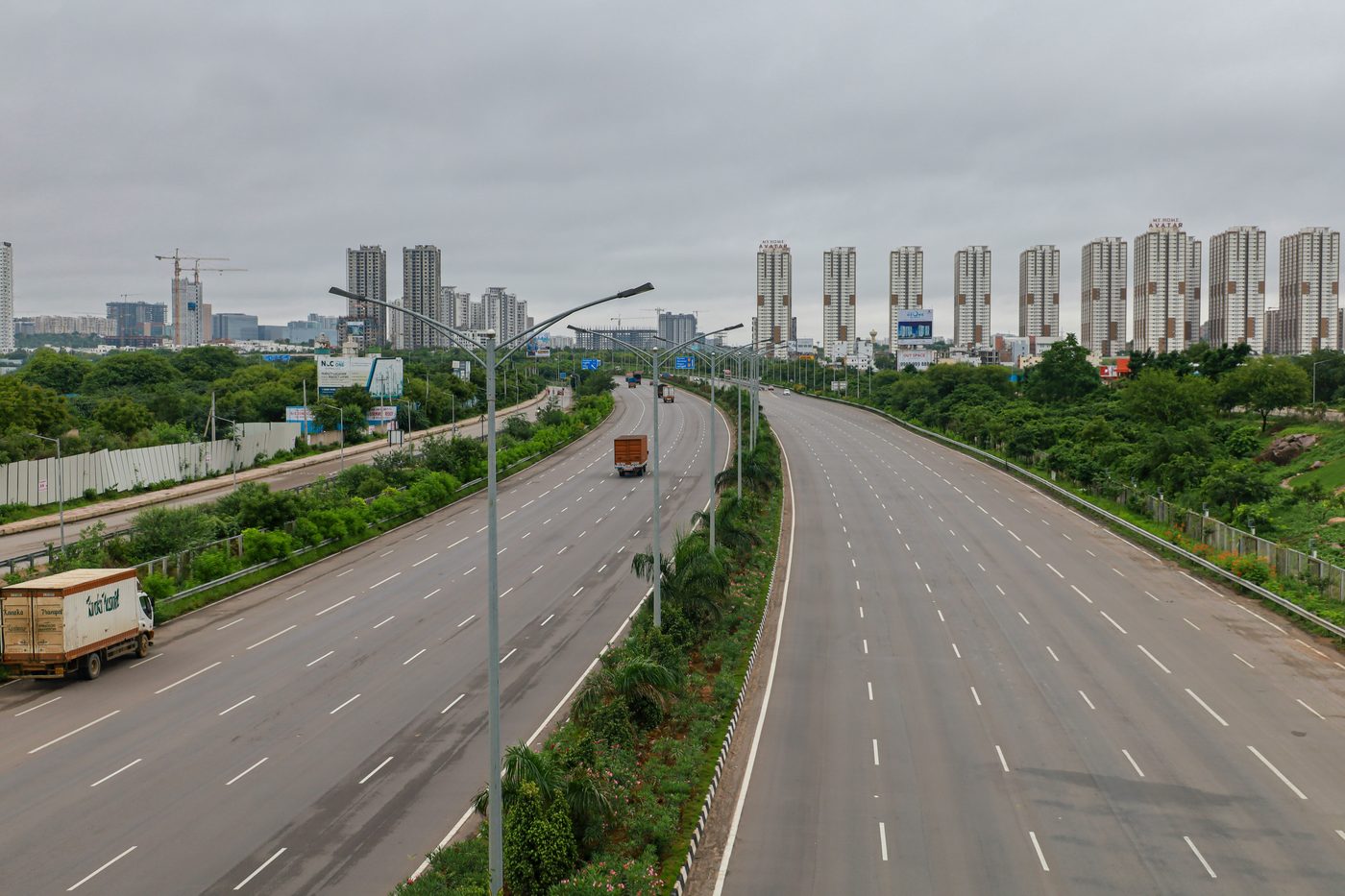
Somewhere on the drive out towards Shankarpalli, Moinabad or the Vikarabad road, the city thins out and the idea arrives on its own. A few acres of green. A cottage you drive to on Friday evening. Mango trees you did not plant but somehow own. Someone else does the watering and the weeding while the land, everyone assures you, quietly appreciates. This is the pitch behind “managed farmland,” and it has become one of the most heavily marketed property categories on Hyderabad’s outskirts. We think it deserves a calm, honest look — because the lifestyle can be genuinely lovely, and the diligence is genuinely where people get hurt.
This is not a piece written to talk you out of it or into it. It is the conversation we have with clients who bring us a glossy brochure and ask, simply, “Is this a good idea?” The honest answer is: it can be, for the right buyer, on the right parcel, bought the right way — and it can be a slow, illiquid, hard-to-exit mistake on the wrong one. The difference is almost never the trees. It is the paperwork.
What “managed farmland” actually is
Strip away the branding and the model is straightforward. A developer aggregates a large tract of land on the city’s periphery, divides it into farm parcels — often an acre or a fraction of one — and sells them to individual buyers. Alongside the land, they offer a management service: they maintain the common areas, tend orchards or plantations, run the irrigation, sometimes operate a farm-to-table kitchen, a clubhouse, a lake, sports facilities. You own a piece of the countryside without having to become a farmer. For a city professional, that convenience is the entire appeal.
The pitch usually rests on three legs. First, lifestyle — a weekend home, clean air, space for children, a hedge against apartment-block density. Second, a lower entry ticket than a comparable second home inside the city, because raw land on the periphery is cheaper per square foot than built-up real estate. Third, appreciation — the promise that the city is growing towards you, and that today’s farm road is tomorrow’s arterial. All three can be true. None of them is guaranteed, and the third is the one most often oversold.
The appeal, stated fairly
We want to be fair to the good version of this asset, because it exists. A well-run managed farmland community, on cleanly-titled land, with real amenities and an honest developer, offers something an apartment cannot: land, greenery, and a lifestyle that improves with holding rather than depreciating with age. Land does not need repainting. A thoughtfully planted orchard genuinely matures. And for a buyer who wants the weekend escape more than the return, the “investment” framing is almost secondary — they are buying a life, and any appreciation is a bonus.
The trouble begins when the lifestyle buyer and the returns buyer are sold the same brochure. So before anyone signs, here is the diligence we insist on — the questions that separate a sound parcel from a pretty problem.
Diligence, part one: does the seller actually own it, and can they sell it to you?
Everything starts with title. Not a photocopy of a passbook, not a confident assurance — a clear, marketable title traced back through the chain of ownership. Ask for the mother deed (the parent document from which the current title descends) and the successive sale deeds that link it to today’s seller. You are checking that ownership passed cleanly at every step, that there are no gaps, no disputed successions, no unreleased mortgage, no pending litigation, no encumbrance. An encumbrance certificate from the sub-registrar and a title opinion from an independent property lawyer are not optional extras here; they are the whole point.
This is also where the single most common red flag on the outskirts appears: the GPA sale. Land is sometimes offered on the strength of a General Power of Attorney, or an agreement to sell, rather than a registered sale deed conveying title to you. Treat this as a stop sign. The Supreme Court, in the well-known Suraj Lamp judgment and reaffirmed since, has been unambiguous: a GPA, an agreement to sell, or a will does not transfer ownership of immovable property. Only a duly registered sale deed does. A “GPA property” does not make you the owner in the eyes of the law, cannot be safely mutated into your name, and will haunt you the day you try to sell. If the only instrument on offer is a GPA, you are not buying land — you are buying a lawsuit in waiting.
On the outskirts, the prettiest parcels sometimes carry the weakest paper. Buy the title, not the trees — a registered sale deed in your name, or walk away.
Diligence, part two: is it agricultural land, and are you allowed to use it the way you imagine?
This is the part that catches lifestyle buyers off guard. Most of this land is, in the government’s records, agricultural land. That classification carries real consequences for what you may legally build and do. If you intend to put up anything beyond permitted agricultural use — a farmhouse, a proper dwelling, non-farm structures — the land generally has to be converted from agricultural to non-agricultural use. In Telangana this is the NALA process (the Telangana Agricultural Land Conversion for Non-Agricultural Purposes Act), which requires prior permission from the competent authority and payment of a conversion charge. Using agricultural land for non-agricultural purposes without this conversion can attract penalties.
So the question to put to any developer is blunt: is this parcel still agricultural, or has it been NALA-converted for the use you are being sold? If they are marketing a “weekend home” on land that remains agricultural on paper and unconverted, the promised lifestyle may not be legally deliverable. Get the answer in writing, and verify the land-use status yourself against the revenue records rather than the sales deck.
Alongside conversion sits the layout question. Many peripheral plotted developments were laid out without full statutory approval, which is why Telangana has run the Layout Regularisation Scheme (LRS) — a mechanism to regularise unapproved plots and layouts and bring them into the planning fold. If you are buying into a layout, ask whether it is an approved layout in the first place, and if not, what its LRS status is. An unapproved, unregularised layout can mean difficulty getting basic infrastructure sanctioned, obstacles at resale, and uncertainty about what you can ever build. “It’s under LRS” is not the same as “it’s approved.”
Diligence, part three: is “managed” a contract, or a brochure adjective?
The word “managed” is doing a lot of work in these pitches, so pin it down. Maintenance of common areas, upkeep of your parcel, security, irrigation — are these promises written into an enforceable agreement, with a defined scope, a stated fee, a duration, and a clear answer to what happens if the developer’s management entity winds down or loses interest in five years? A verbal assurance of “lifetime maintenance” is worth exactly nothing when the sales office has moved on to the next project.
Be especially careful with any promise of returns — guaranteed yields from crops, timber, or “assured” annual income. Farm returns are real but variable: they depend on weather, water, crop prices, pests, soil, and competent management, and independent coverage of the sector consistently notes a gap between projected and actual yields as farms mature. Marketing figures in the range of, say, eight to twelve percent a year are commonly cited across the industry, but they are illustrative, not contractual, and rarely underwritten. If a return is genuinely promised, it should be a written, enforceable obligation of a creditworthy party — and if it is only a slide in a presentation, treat it as marketing, not a forecast you can bank.
Diligence, part four: how do you get out?
Assume, for a moment, that everything above checks out. You still have to reckon with illiquidity, which is the quiet risk that surprises people most. Farmland on the outskirts does not trade like a city apartment. The buyer pool is thinner, the price discovery is slower, and a sale can take months rather than weeks. Industry sources describe typical holding periods of several years and note that distress or emergency sales often fetch materially below guidance — a discount of a fifth or more is not unusual when you must sell fast. If your capital might be needed in a hurry, this is the wrong home for it.
It is worth knowing where RERA does and does not sit in this picture. Raw agricultural land sold as-is generally falls outside RERA. But once a promoter markets a plotted development or layout — dividing land and selling plots as a project — RERA registration can apply above the statutory thresholds (broadly, layouts beyond a defined area), and buying into a registrable project that has skipped registration is itself a warning sign. Check the Telangana RERA (TG-RERA) portal for the project rather than assuming it is exempt because “it’s farmland.” The exemption is narrower than sellers imply.
A hard rule for our non-resident clients
This one is not a judgment call, it is a legal wall, and we state it plainly because it is regularly glossed over in farmland pitches aimed at the diaspora. NRIs and OCI cardholders cannot buy agricultural land, plantation property or a farmhouse in India. This flows from FEMA and the RBI’s framework, and it holds regardless of how the money is funded. A non-resident may come to own such property by inheritance, or receive it as a gift from a resident relative — but cannot purchase it. Contraventions carry serious consequences, including penalties and even the prospect of the property being confiscated.
So if you are an NRI or OCI being sold “managed farmland,” the very first question is not the return — it is whether the parcel is legally agricultural at all, and if it is, the answer is that you cannot buy it, full stop. Some projects are structured on already-converted, non-agricultural land, which changes the analysis; but that is precisely the kind of fact to verify independently before any money moves, not to take on faith from the brochure.
None of this is meant to dim the daydream. There is a real, honest version of the weekend-farm life, and for the right buyer it is a fine thing to own. But it is an asset that rewards patience and punishes haste, and almost every farmland horror story we have seen traces back to a diligence step that was skipped because the trees were pretty and the sales pitch was warm. That is where an advisor earns their keep — not by selling you the dream, but by pressure-testing it. If you are weighing a managed-farmland purchase anywhere around Hyderabad, our advisory team will read the title chain, check the land-use and LRS status, examine the management and any returns promises for what is actually enforceable, and tell you plainly whether it holds up — including, if it does not, that you should pass. Bring us the brochure before you sign, not after. Please treat everything above as general guidance rather than legal or tax advice: rules and charges change, so verify the current position on the official Telangana revenue, LRS and TG-RERA portals and with a qualified property lawyer and chartered accountant before you commit.
Recommended For You
Best Match
Tamra Asteria
A 23-floor, 312-apartment high-rise on Bandlaguda Jagir main road where every home is a 3 BHK of 2,230–3,110 sq ft — with a 30,000 sft clubhouse and a 2.10-acre retail block at the same address, by Hometouch.
View ProjectAlso Consider
Autumn
182 independent duplex villas across 23 acres at Thummaloor in Maheshwaram, ten kilometres from ORR Exit 14 and inside Hyderabad’s Future City belt — plots of 267, 300 and 400 sq yd built out to 3,035–4,305 sq ft, each with a lift shaft and two car parks, around a ~30,000 sq ft clubhouse, by E-Infra.
View ProjectPlanning a premium purchase in Hyderabad?
Get an honest, project-by-project read from a REALOS advisor — including availability and pricing shared privately.