Inside Hyderabad’s Financial District: Nanakramguda, Gachibowli & the ORR-West Corridor
A calm, analytical look at Hyderabad’s Financial District, Nanakramguda and Gachibowli belt — what really drives it, how connectivity is maturing, who buys here, and what a serious buyer should weigh before committing.
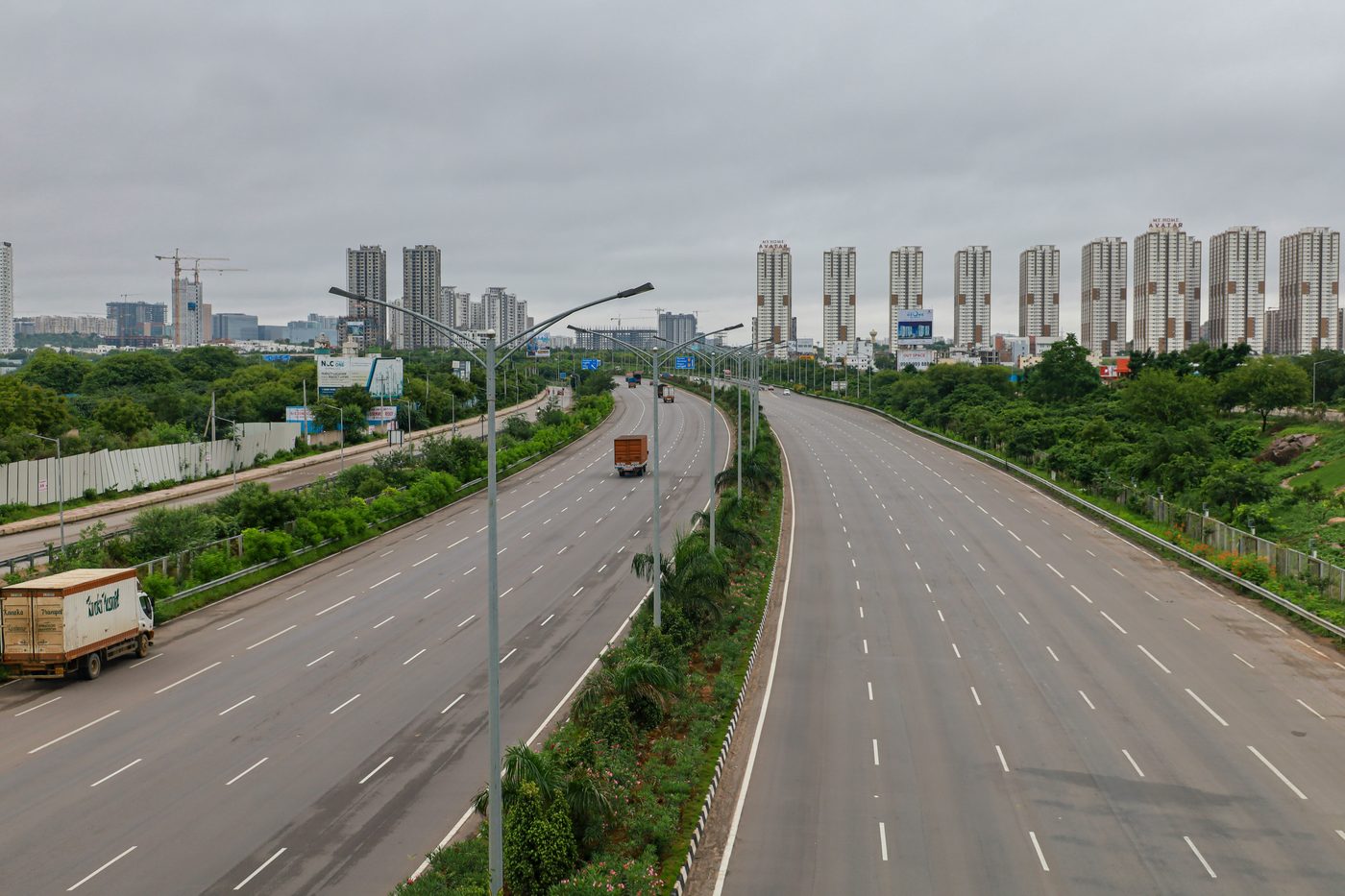
Ask ten people in Hyderabad where the city’s centre of gravity has moved, and most will point west — to the cluster of glass towers, eight-lane roads and gated high-rises that stretches from Gachibowli through Nanakramguda into what everyone now simply calls the Financial District. It is one of the most talked-about micro-markets in south India, and also one of the most misunderstood. Buyers arrive with a mental image of Dubai-style skylines and assume the investment case writes itself. Our advisory team’s view is calmer: this is a genuinely strong corridor with real, durable demand drivers — but like any premium market, it rewards buyers who understand why it works before they chase a specific tower. This guide is our attempt to lay out that “why” honestly.
What actually drives this corridor
The Financial District is not a marketing label bolted onto farmland — it is a master-planned employment zone in the Serilingampally belt of west Hyderabad, spread across Nanakramguda, parts of Gachibowli and the adjoining Kokapet fringe. Its foundation is employment density: a concentration of banking, financial-services, IT and consulting operations large enough to anchor housing demand on its own. ICICI Bank runs one of its largest workplaces here; the WaveRock IT-SEZ at Nanakramguda houses a roster of global names; and Gachibowli next door has long been home to marquee campuses. More recently, the largest global cloud and AI players have announced very substantial infrastructure commitments across the wider Hyderabad region. We’d flag the usual caution — announced investment is not deployed capital, and headline figures should be verified against current filings — but the direction of travel is clear, and it is toward more high-income jobs within a short commute of these homes.
That employment base is the whole engine. It produces a steady stream of senior professionals who want to live near work, a rental pool deep enough to keep occupancy healthy, and the kind of income profile that supports premium pricing. When people describe the Financial District as “Hyderabad’s Dubai,” they’re usually reacting to the skyline. The part that matters to a buyer is quieter: jobs, salaries and proximity.
The residential-versus-commercial balance
This corridor is unusual in that its commercial and residential stories are tightly braided rather than separate. The Financial District core is still, at heart, an office and SEZ zone — Grade-A commercial space, campuses and business parks. The residential product has grown up around and above that base: gated apartment communities and high-rises in Gachibowli and Nanakramguda, with newer luxury towers pushing toward the Kokapet edge. For a buyer, the practical implication is that you are rarely buying a pure residential story or a pure commercial one — you’re buying a home whose value is underwritten by the office economy next door, or a commercial unit whose tenants are drawn from that same ecosystem. Both can work; they simply carry different risk and yield profiles, and shouldn’t be evaluated with the same yardstick.
Connectivity: the quiet compounding factor
The single biggest reason this belt matured faster than most is the Outer Ring Road. The ORR turned what were once far-flung western villages into a fast, grade-separated network — knitting the Financial District to the wider city and, crucially, to Rajiv Gandhi International Airport at Shamshabad. For senior professionals and NRIs who travel often, that airport access is not a nice-to-have; it is frequently the deciding factor between two otherwise similar homes.
- Outer Ring Road: Wide, largely signal-free arterial access that connects the corridor to the airport, the wider IT belt and the rest of the city — the infrastructure that made the whole zone viable.
- Airport reach: Comfortable road access to Shamshabad via the ORR, a genuine draw for frequently-travelling buyers and one reason the corridor skews toward globally-mobile professionals.
- Proposed metro extension: Hyderabad Metro’s Phase 2 plans include a proposed elevated corridor extending the existing network toward Nanakramguda, the Financial District and the Kokapet/Neopolis edge, with a separate airport link also planned. Please treat alignments, station lists and timelines as proposed and subject to change — verify the current status before pricing any “metro premium” into a purchase.
- Internal road maturity: Within the corridor, road width and last-mile quality vary noticeably between the established Gachibowli/Nanakramguda pockets and the newer fringe — worth checking on the ground, not just on a brochure map.
The pattern to notice is that connectivity here compounds. Each layer — the ORR first, and potentially the metro next — tends to pull demand and pricing along with it. That is a tailwind, but it is also exactly why buyers should separate what already exists (the ORR, the campuses) from what is still on paper (metro timelines). Pay the premium for what is delivered; treat the rest as optionality, not a promise.
Who buys here, and why
The buyer profile in this corridor is fairly distinct, and it explains a lot about how the market behaves.
- Senior professionals and CXOs working in the Financial District, Gachibowli or the wider IT belt, buying to live minutes from the office — the classic self-use case that anchors genuine, non-speculative demand.
- HNIs treating a premium apartment here as a core, liquid, blue-chip holding within a broader property portfolio — valuing brand-name developments and address prestige.
- NRIs, for whom airport proximity, professional property management and the reassurance of an established, high-visibility micro-market matter as much as the headline yield.
- Investors drawn by the corridor’s deep rental pool and relative liquidity — the ability to exit or re-let without waiting years for the neighbourhood to “arrive.”
Because so much of the demand is end-user and employment-linked, this market tends to be steadier and more liquid than corridors that run mostly on speculative pre-launch flipping. That steadiness is, in our view, the corridor’s most underrated feature.
The Financial District’s real edge isn’t its skyline — it’s that people want to live here because they already work here. Demand grounded in jobs is simply more durable than demand grounded in a story.
How it relates to the Kokapet belt
No honest read of this corridor can ignore Kokapet, its neighbour to the south — though we cover the Kokapet–Gandipet luxury belt in depth in a separate piece, so we’ll keep the comparison light here. The short version is that the two are complements, not substitutes. The Financial District and Gachibowli represent the mature end of the corridor: established infrastructure, a proven office economy, consistent rental demand and lower execution risk, but with entry pricing that already reflects much of that maturity. Kokapet and its Neopolis layout sit at the growth end: large master-planned parcels, record land-auction values, a wave of tall luxury launches, and a case that leans more on future appreciation than on today’s rental income. Neither is simply “better.” The right choice depends on whether a buyer is optimising for stability and yield-plus-liquidity, or for a longer-horizon appreciation bet — and on their appetite for construction and delivery risk.
What a buyer should actually weigh
If you’re considering this corridor, here is the checklist our advisory team would walk through with you — deliberately unglamorous, because the glamour takes care of itself.
- Infrastructure maturity, pocket by pocket: The corridor is not uniform. Established Gachibowli and Nanakramguda enjoy settled roads and services; the newer fringes are still filling in. Judge the specific pocket, not the corridor’s reputation.
- Pricing trajectory and entry point: Premium sub-markets like this can trade at a meaningful premium to the city average, and pricing spans a wide band depending on project, developer and exact location. Always verify current per-square-foot figures against live listings and recent registrations — do not rely on any single quoted number, including the general ones in this article.
- Rental demand versus your goal: This is one of Hyderabad’s stronger rental markets thanks to the employment base — but yields on ultra-premium stock can still be modest relative to price. Be clear whether you are buying primarily for rental income, appreciation or self-use, and test the specific unit against that goal.
- Developer track record and RERA: Address prestige is not a substitute for due diligence. Check the project’s RERA registration, the developer’s delivery history and the clarity of title before anything else.
- The “proposed” premium: If a price is being justified partly by the metro or other future infrastructure, discount that portion until it is committed and dated. Buy the delivered corridor; take the future as upside.
Featured Project
Destino by Sunshine Developers, Puppalguda
A useful reference point for the “live beside the Financial District” buyer — a gated premium community at Puppalguda, roughly two kilometres from the Financial District with quick reach to Gachibowli, HITEC City and the ORR. It illustrates the kind of end-user-led product this corridor is built on, where the case rests on employment proximity and liquidity rather than a pure appreciation bet. Illustrative only — verify current RERA status, stage and pricing before you commit.
View ProjectThe Financial District, Nanakramguda and Gachibowli belt is, in our honest assessment, one of Hyderabad’s most fundamentally sound corridors — not because of the skyline, but because of the jobs, the connectivity and the depth of genuine end-user demand beneath it. That same strength is why it demands discipline: at these price levels, the difference between a good buy and an ordinary one comes down to the specific pocket, the specific developer and the specific unit, not the corridor’s headline story. If you’re weighing a home or an investment here — or trying to decide between the mature Financial District and the growth-stage Kokapet belt — our advisory team is glad to walk the trade-offs through with you, pull the RERA and registration records, and pressure-test the numbers against your actual goal. No pitch; just a clear-eyed second opinion before you commit.
Recommended For You
Best Match
Tamra Asteria
A 23-floor, 312-apartment high-rise on Bandlaguda Jagir main road where every home is a 3 BHK of 2,230–3,110 sq ft — with a 30,000 sft clubhouse and a 2.10-acre retail block at the same address, by Hometouch.
View ProjectAlso Consider
Godrej Brooklyn Avenue
A Godrej-branded 3 & 4 BHK address in established Kukatpally — dependable execution in a self-use-friendly, well-serviced location.
View ProjectPlanning a premium purchase in Hyderabad?
Get an honest, project-by-project read from a REALOS advisor — including availability and pricing shared privately.